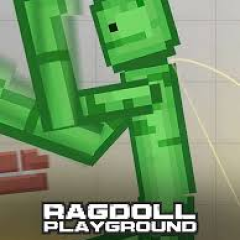
A character in Ragdoll Drop gets ready to enter a complicated system at the beginning of the game. Every fall is an intriguing challenge due to the realistic motion simulation's characteristics.
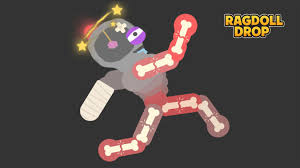
The link between fall force, impact angle, and environmental response is the foundation of play. To boost their score, players must select the ideal launch location to produce a string of successive collisions. Every bodily portion of the ragdoll reacts differently when it comes into contact with surfaces. Several levels of vertically stacked structures make to the map's design. A lengthy fall path with numerous points of contact is created by stairs, sloped platforms, and metal bars. When the body strikes a surface, the rebound force causes it to change its direction of bounce or spin in midair. Each player's experience is unique due of the design. To direct the ragdoll to locations where longer collision chains may occur, players must pay attention to the map's layout. The score can be greatly increased by sending the player bouncing over several consecutive trap levels with a precise landing.
Players can concentrate on strategy because the control scheme is made to be straightforward. The launch force and timing for the character's release are chosen by the player using the mouse or touchscreen. Players can use a number of support actions to change the ragdoll's direction of motion once it starts to fall. In order to achieve the best results, players often focus on utilizing the map structure. Longer collision chains can be produced by guiding the ragdoll toward regions with several consecutive traps. To boost initial speed, many seasoned players frequently select high launch spots. The physical reaction chain will stretch through several structural layers after a forceful landing. Players progressively learn how Ragdoll Drop's environment functions through constant experimenting.